BTM – Bridge to Muslims

Published Literature

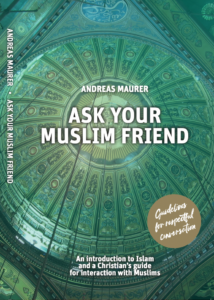
Ask Your Muslim Friend

How did Islam start and what does it teach? Which are its groups and movements? What are the biblical answers to Muslim objections? How can Christians interact with Muslims?
These are just a few questions on which Dr. Andreas Maurer, theologian and expert on Christian-Muslim encounters, gives clear answers. Maurer sees the spread of Islam throughout the world not as a challenge to the Christian church. He presents a compact and easily understood survey on the history of Islam, its teaching and religious background. Different groups and movements within Islam are also described. Readers will receive answers to Muslim objections and practical guidelines for interacting with Muslims.

Illustrations Parables Stories for Muslims

Most people, including Muslims, love to listen to stories. The stories in this booklet should make people think and thus encourage them to seek the truth of God. Many stories are taken from parables in the Bible. They tell biblical truth to people in everyday life situations. Yet, the story teller has to learn to use words which can be clearly understood by the listeners within the particular cultural setting. The stories may also serve as a means to engage into conversations with Muslim people. These stories have been collected over a period of many years. It is hoped that they may be a blessing to Christians and Muslims.

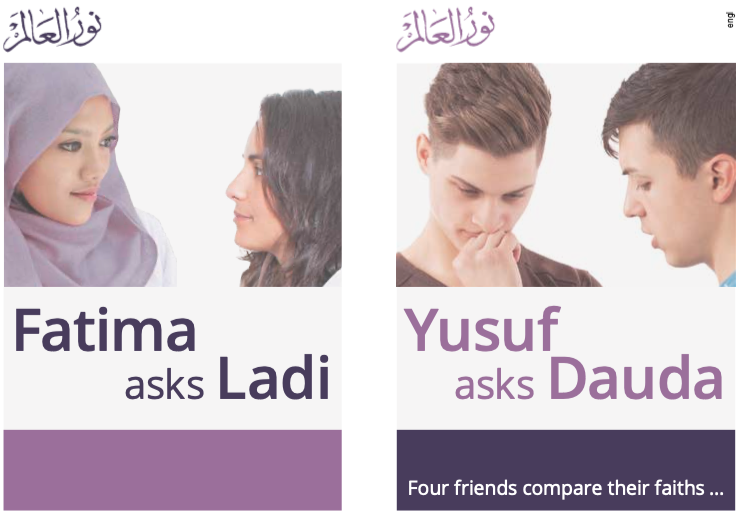
Yusuf asks Dauda, Fatima asks Ladi

Respectful conversation between Christians and Muslims.

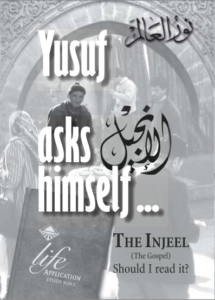
Yusuf asks himself ... The Gospel. Should I read it?

“Should I read it or should I not?” A question asked not only by Yusuf but by many Muslims of different cultures, languages, confessions and age groups. So, if you are asking yourself the same question, these ideas will help you find the answer.

A Proposed Charter of Muslim Understanding By Sam Solomon

A Proposed Charter of Muslim Understanding By Sam Solomon

It is beyond dispute that within Islam there are both Muslims committed to peace and others who embrace violence, a reality evident not only across the Islamic world but also within many Western societies. This raises pressing questions for liberal democracies: how can they articulate and cultivate a constructive relationship with Muslim communities in their midst, and how should those communities themselves respond to members who resort to violence?

These concerns were addressed through A Proposed Charter of Muslim Understanding, written by Sam Solomon in 2007 and made freely available for download. The Charter was presented to the European Parliament on 13 December 2006 by Gerard Batten, MEP, and marked a groundbreaking initiative aimed at showing how moderate Muslims could formally commit to rejecting violence and terrorism as means of advancing Islam.

The Truth about A Common Word By Sam Solomon

In 2009, Sam Solomon published The Truth about A Common Word, a freely available response to the 2007 open letter A Common Word Between Us and You, signed by over 100 Muslim scholars and welcomed by Pope Benedict XVI, Archbishop Rowan Williams, and more than 300 Christian leaders. The original document claimed that Christians and Muslims worship the same God and share the principles of love of God and love of neighbour. Solomon critiques Christian signatories for accepting these claims uncritically, particularly the assertion that Islamic teaching affirms biblical love of God and neighbour, as well as other theological concessions. As noted by Colin Dye in the preface, the book argues that A Common Word creates an appearance of common ground through selective use of Qur’anic and biblical texts, rather than reflecting a genuine theological convergence.

Comparison of Shari’ah Law and English Law

A Comparison Table of Shari’ah Law and English Law

In 2009, Sam Solomon, together with Kathryn Wakeling, compiled a comparison table of Sharīʿah law and English law for use in a parliamentary debate. Freely available for download, the table offers a clear and accessible side-by-side comparison, highlighting the significant and often stark differences in principles and legal approaches between the two systems.

Islamisation through halal products

Islamisation through halal products by Sam Solomon

In 2019, Sam Solomon published a freely available report on Islamisation through halal products, arguing that what many see as a neutral consumer choice is in fact part of a wider ideological project involving Islamic law, finance, education, and social structures. Where does ordinary commerce end and religious worldview begin? Are halal markets simply about food, or do they function within a broader vision of social transformation? And how should liberal, secular societies understand the growth of parallel religious systems operating in plain sight?

->